
Clunking Noises and Uneven Tire Wear Signal Suspension Failure
Car Suspension Repair in Waukesha for poor handling, bouncing over bumps, and steering that pulls under braking
Apex European Motorsports LLC performs suspension repairs on European vehicles that show signs of worn control arms, failing shock absorbers, or degraded bushings that no longer maintain wheel alignment during cornering and braking. Your suspension system supports vehicle weight, absorbs road impacts, and keeps tires in contact with pavement through a network of springs, dampers, linkages, and pivot points designed to respond to steering input and load transfer. When you hear clunking sounds over uneven pavement, when the vehicle bounces excessively after hitting a pothole, or when tire tread wears unevenly across the width, suspension components are no longer controlling wheel movement within the tolerances needed for stable handling.
Common issues include worn ball joints that allow lateral play in the wheel hub, blown shock absorbers that no longer dampen spring oscillation, torn control arm bushings that shift under load, and stabilizer bar links that rattle during lane changes. Each of these conditions reduces ride quality, increases stopping distances, and allows the chassis to move unpredictably during emergency maneuvers. Suspension repairs involve replacing components that have exceeded wear limits and restoring geometry so that camber, caster, and toe angles return to manufacturer specifications.
If your vehicle drifts between lanes or feels unstable during highway driving, schedule suspension service to identify which components require replacement before handling deteriorates further.
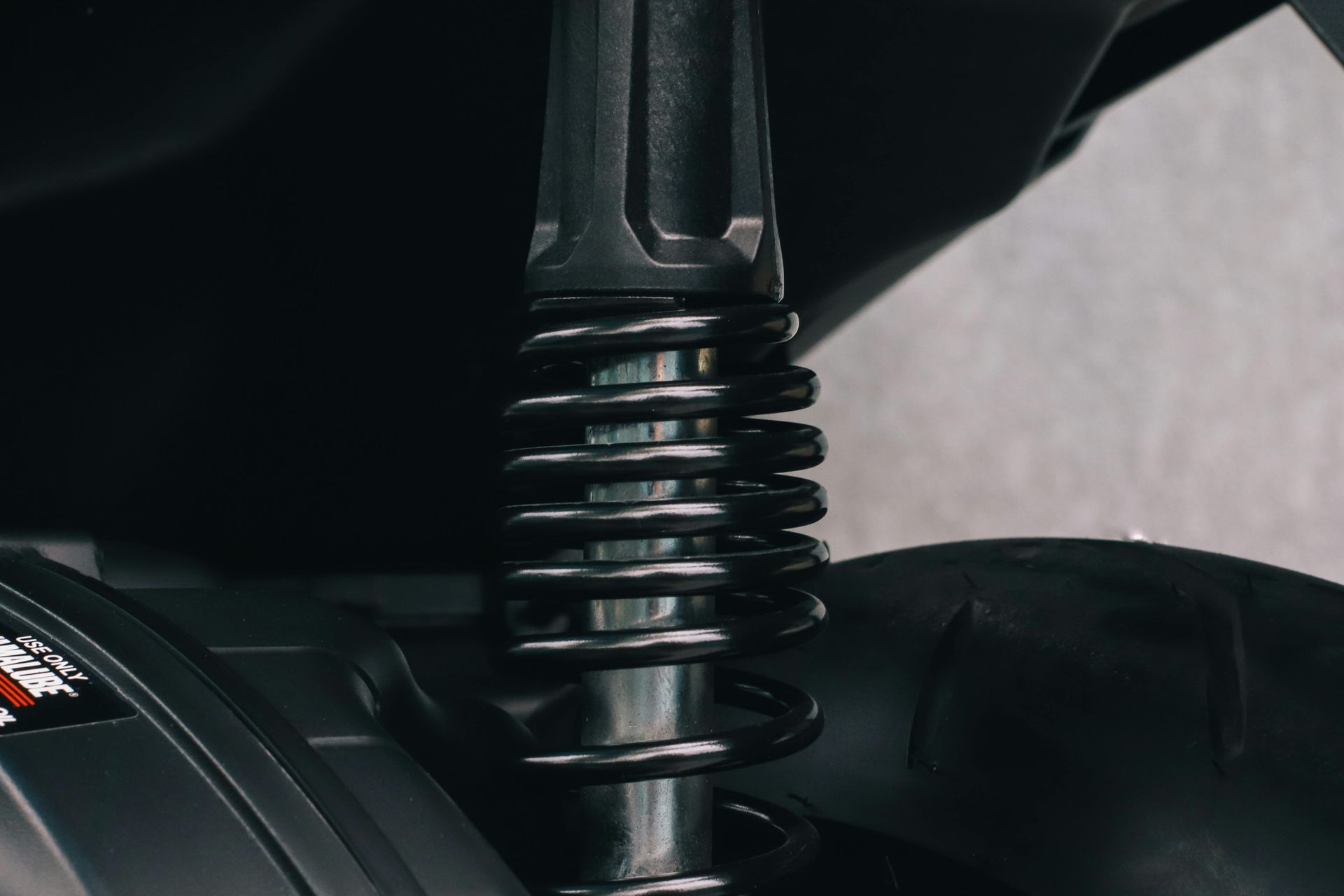
Replacing Worn Components Restores Controlled Wheel Movement
You describe how the vehicle behaves, and technicians lift it on a rack to inspect bushings for cracking, ball joints for play, shock absorbers for leaking fluid, and springs for sagging or fractures. Measurements taken at ride height reveal whether suspension geometry has shifted outside alignment tolerances, which accelerates tire wear and reduces braking effectiveness. Repairs include pressing out worn bushings and installing polyurethane or rubber replacements, unbolting control arms with seized ball joints, installing gas-charged shock absorbers matched to vehicle weight, and replacing sway bar end links that no longer prevent body roll during cornering.
After suspension repairs, you will notice that the vehicle no longer wanders within the lane, that it absorbs bumps without transmitting harsh impacts into the cabin, and that tire contact patches remain even across the tread surface during acceleration and braking. Apex European Motorsports LLC selects suspension parts that meet European OEM durability standards, which means bushings resist heat and ozone cracking, shock valving matches damping rates calibrated for performance handling, and hardware torque specifications maintain joint integrity under the higher cornering loads these platforms generate.
Suspension issues affect braking and steering control because worn components allow the wheel hub to shift position under load, which changes the contact patch angle and reduces the tire's ability to generate lateral grip. Replacing failed parts before alignment becomes severely compromised prevents additional wear on tires, wheel bearings, and steering rack bushings that absorb forces the suspension no longer controls.
Understanding Suspension Wear and Repair Timing
Drivers often wonder whether suspension noise requires immediate attention or whether repairs can wait until other service is scheduled. The following questions clarify how suspension problems develop and what repair processes involve.
What causes uneven tire wear on European vehicles?
Worn control arm bushings and ball joints allow camber and toe angles to shift beyond specifications, which causes the inside or outside edge of the tire to scrub against pavement instead of maintaining even contact across the full tread width. Alignment adjustments cannot compensate for worn suspension components.
How do shock absorbers affect ride quality?
Shocks dampen spring oscillation after the suspension compresses over a bump. When internal valving fails or fluid leaks past worn seals, the spring rebounds without resistance, causing the vehicle to bounce repeatedly and reducing tire contact with the road surface.
When should suspension components be replaced instead of adjusted?
Alignment corrects angles within the range allowed by adjustment slots, but if bushings are torn or ball joints show measurable play, alignment settings will not hold under driving loads. Components must be replaced first, then alignment performed to set geometry correctly.
Why do European performance vehicles require specific suspension parts?
Performance suspension systems use stiffer springs, shorter shock strokes, and bushings with controlled compliance to minimize body roll and maintain precise wheel control during aggressive cornering. Using parts not designed for these loads results in handling imbalance and premature failure.
What happens if suspension problems are ignored?
Worn components stress adjacent parts, so a failed ball joint increases load on the control arm bushing, and blown shocks accelerate spring fatigue. Braking distances increase because the wheel moves away from optimal contact during weight transfer, and steering response becomes vague as linkages shift under lateral force.
Suspension problems that begin with minor noises or slight handling changes worsen as internal bushings tear and metal components wear beyond tolerance. Reach out to Apex European Motorsports LLC in Waukesha to schedule an inspection that identifies which suspension parts need replacement before ride quality and control decline further.